🚀 This Week's Space Frontiers
Three breakthrough stories reshaping humanity's cosmic future
🚀 SpaceX Starship: The Mars Colonization Machine
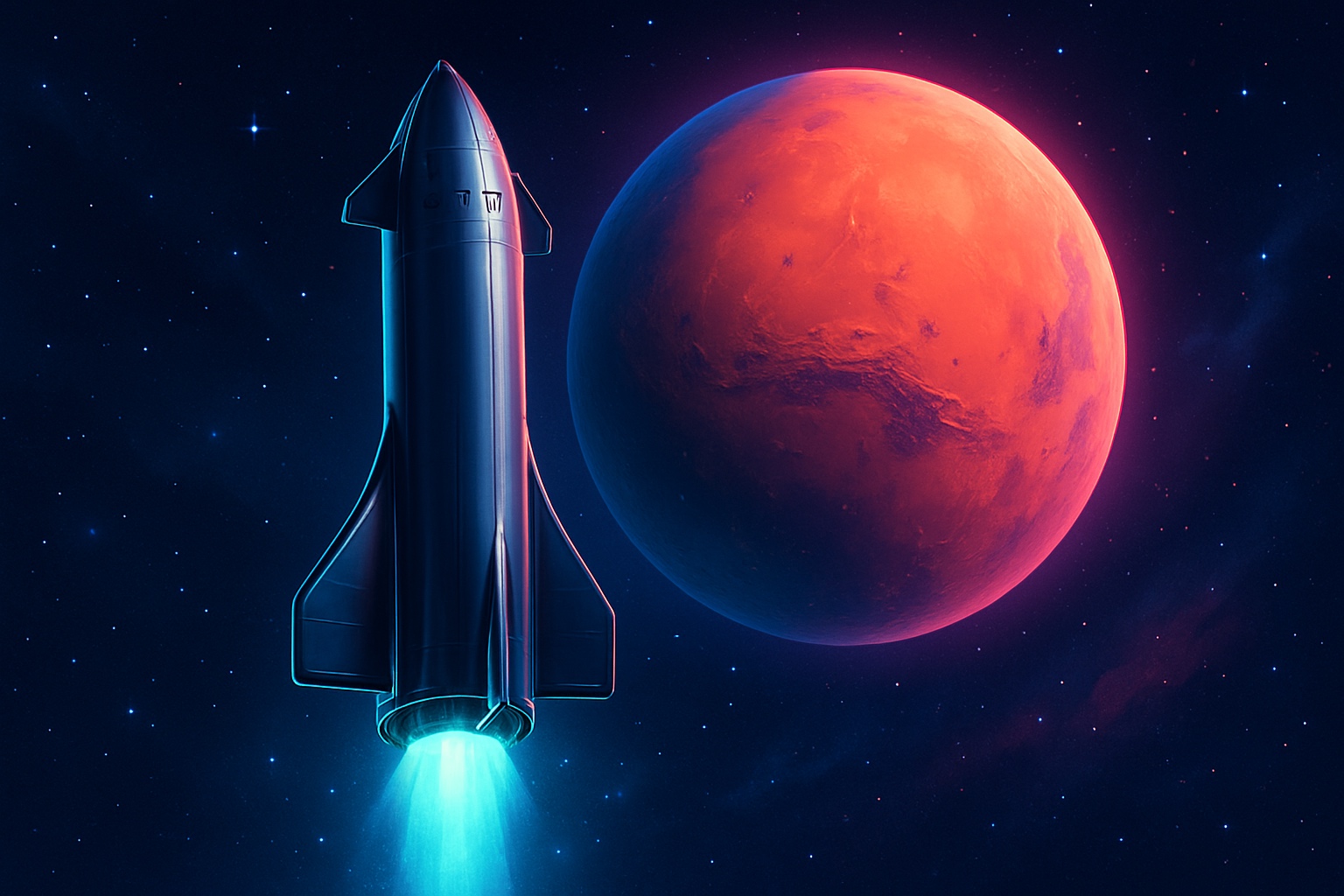
The breakthrough: SpaceX's Starship reached orbital velocity at 28,000 km/h, proving it can escape Earth's gravity and reach other planets. Standing 120 meters tall with 33 engines, it's the most powerful rocket ever built — more powerful than the Saturn V that took humans to the Moon.
Mind-Blowing Fact
Starship will reduce space travel costs from $10,000 per kg to just $100 per kg — making Mars colonies economically viable!
Mars capability: Each Starship can deliver 100-150 tons to Mars — equivalent to 15 truck-loads of habitats, life support, and supplies. Multiple flights could build entire cities on the Red Planet.
Timeline: Unmanned supply missions start in 2026, first human crews by 2028, with permanent settlements by the early 2030s. Every 26 months when planets align, multiple Starships will head to Mars.
🧮 Mission Math: Journey Time
Distance: 225 million km • Speed: 25,000 km/h
🎯 Math Blast Challenge!
A Mars colony distributes 57 power crystals equally among 8 teams. How many crystals per team?
🪐 TRAPPIST-1h: A Second Earth?
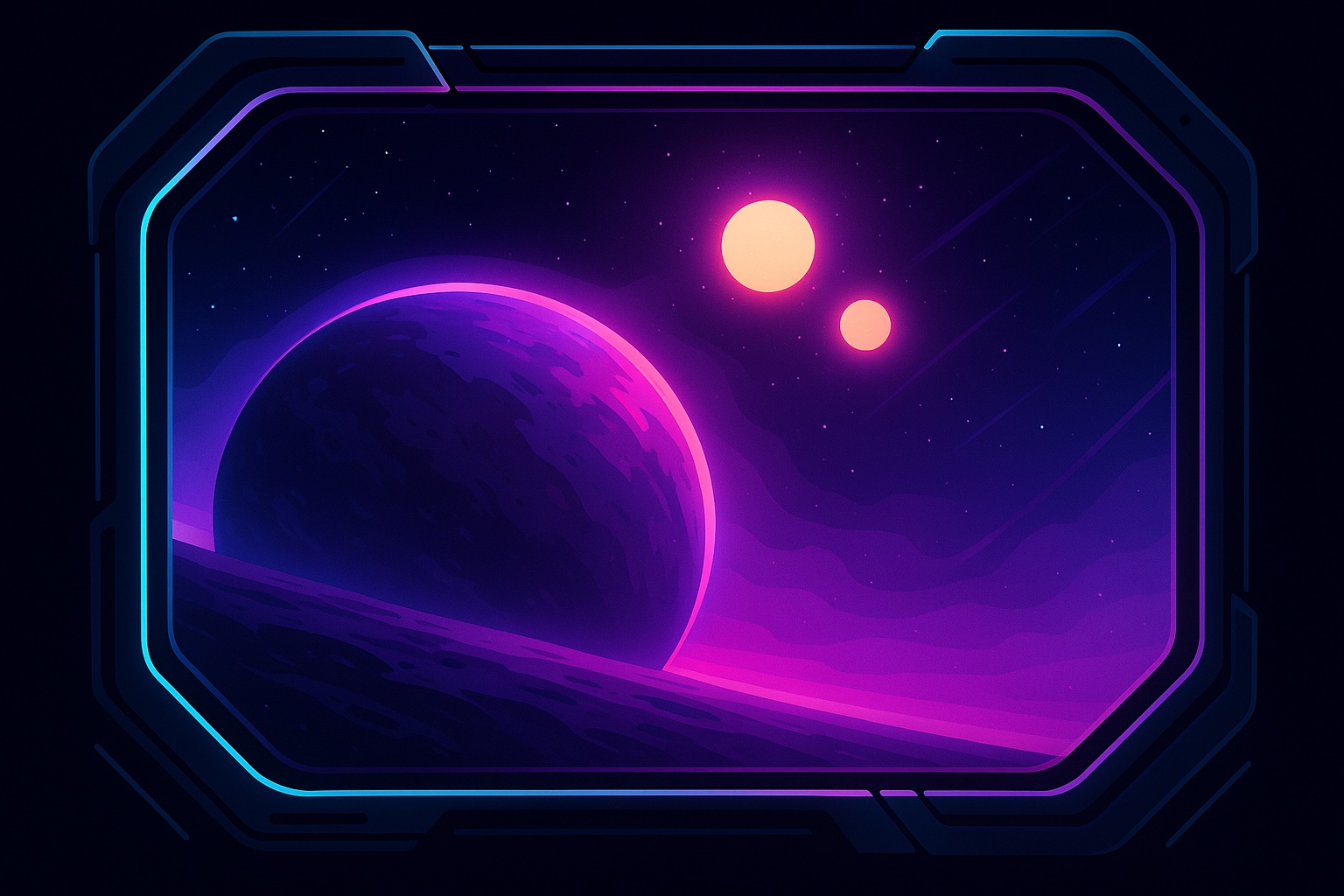
Perfect location: TRAPPIST-1h sits in the "Goldilocks zone" 40 light-years away, with temperatures (-10°C to +10°C) ideal for liquid water oceans. The planet is slightly larger than Earth and takes just 19 Earth-days to complete one orbit around its dim red star.
Game-Changing Detection
TRAPPIST-1h has oxygen, methane, AND chlorophyll in its atmosphere — the exact combination that on Earth means plants and life!
Biosignatures detected: The James Webb Space Telescope found water vapor, oxygen, methane, and even chlorophyll — the molecule plants use for photosynthesis. On Earth, this combination only exists when living organisms are present.
Alien world conditions: With a 19-day year around a dim red star, any plants might be purple or black to absorb the available light more efficiently. Astronomers are now searching for seasonal changes, aurora activity, and even city lights on the night side.
🔭 Distance Challenge
Light speed: 9.46 trillion km per year
🔬 Quick Comparison
Temperature: -10°C to +10°C ✅
Year length: 19 Earth days
Distance: 378 trillion km
Life signs: ✅ Water ✅ Oxygen ✅ Methane
Detection method: Split starlight into colors to identify atmospheric chemicals — each gas creates unique "fingerprints."
⭐ Dyson Swarms: Capturing the Power of Stars
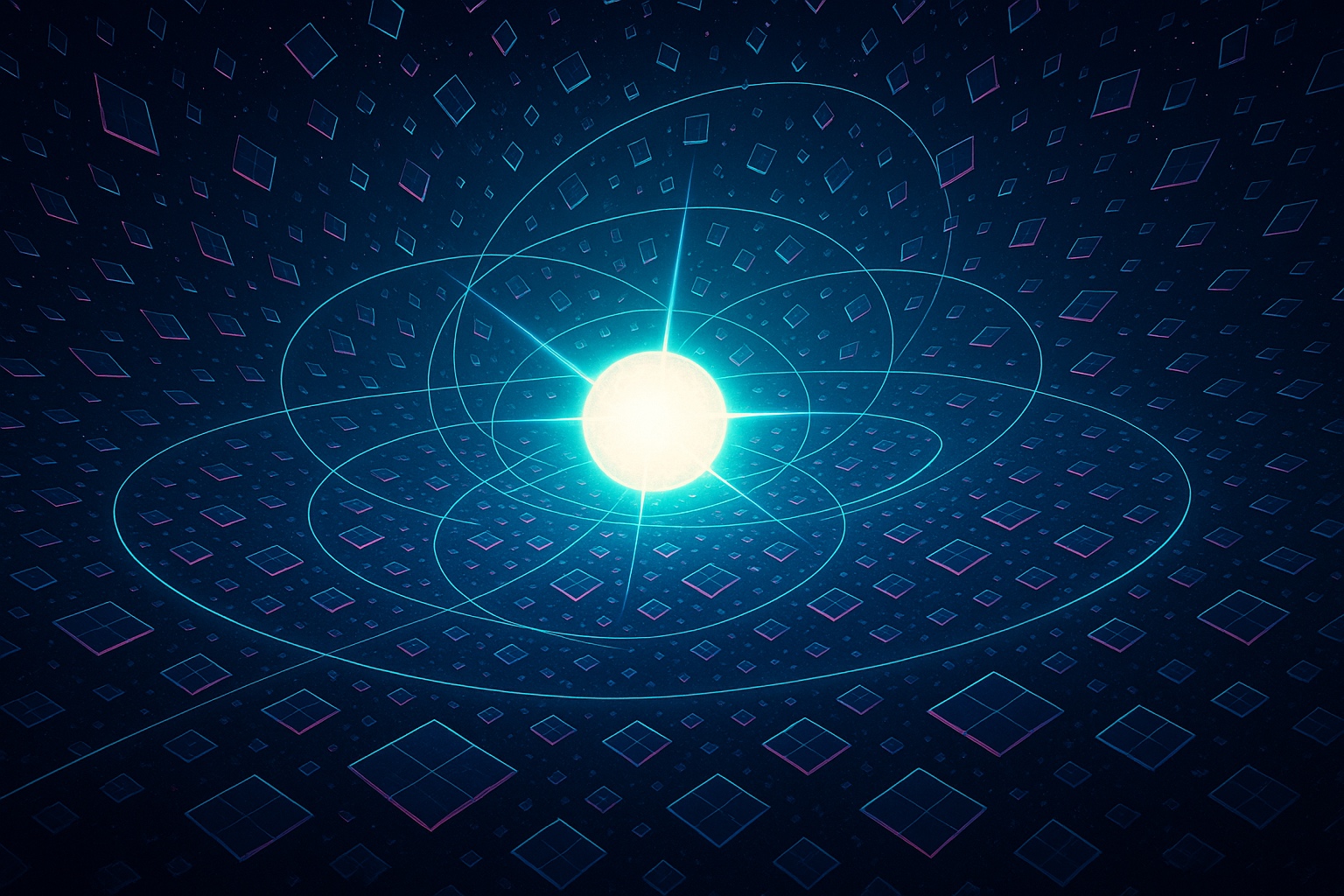
The concept: Millions of house-sized solar panels orbiting our Sun, collecting starlight and beaming energy back to Earth and space colonies. Named after physicist Freeman Dyson (1960), this audacious project represents the ultimate solution to humanity's energy needs.
Unlimited Energy Potential
A Dyson swarm could capture 400 TRILLION times more energy than humanity currently uses — enough to power cities on every planet!
Massive scale: The Sun outputs 384 trillion trillion watts per second. Earth receives only one billionth of this energy. A complete Dyson swarm could capture nearly all of it, enabling revolutionary applications like antimatter engines for interstellar travel and terraforming entire planets.
Self-building system: Self-replicating robots would mine asteroids, build collectors, and expand the swarm exponentially. One robot becomes two, two become four, growing over 200-500 years. Astronomers even search for alien Dyson swarms around other stars as signs of advanced civilizations.
⚡ Power Scale Demo
Current Earth usage: 580 million GWh/year
🤖 Self-Replicating System
Von Neumann probes: Machines that copy themselves using asteroid materials. Growth: 1→2→4→8...
Timeline:
• First robots: 2050s
• Small swarm: 2100s
• Complete system: 2300-2500s
Materials: One metallic asteroid contains more platinum than ever mined on Earth!
🧮 Math Blast: Space Arc Adventures
Join Jake and Priya as they solve cosmic challenges using mathematics!
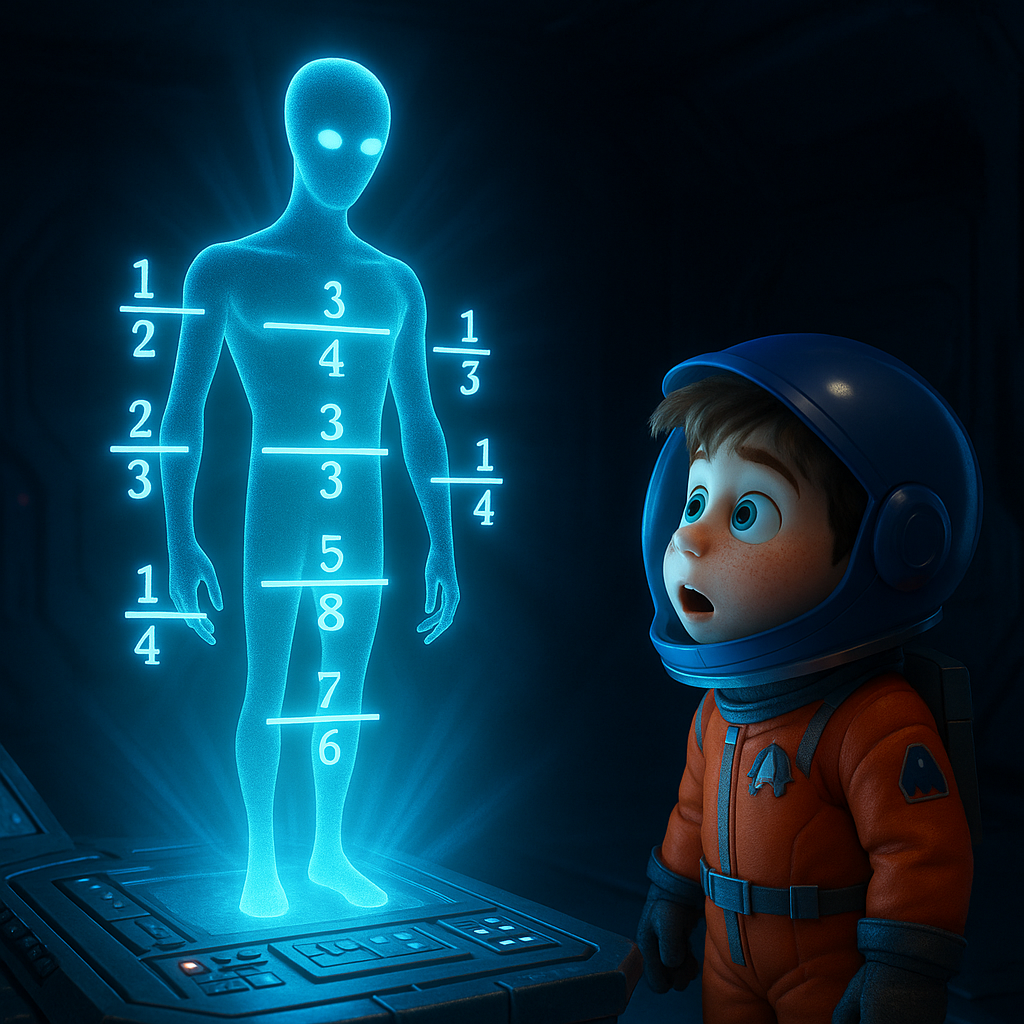
Epic space adventure: Journey through the Space Arc where our heroes help save alien civilizations using division, multiplication, and problem-solving skills. Each issue combines thrilling storytelling with curriculum-aligned maths practice.
Learning that sticks: Instead of boring worksheets, Math Blast presents mathematical concepts through engaging narratives. Students learn by helping Jake and Priya solve real cosmic problems, making maths meaningful and memorable.
Complete collection: All 14 Space Arc issues are live, covering Year 3 and Year 5 Australian Curriculum standards. Ocean Arc and Jungle Arc adventures continue the mathematical journey through underwater cities and mysterious forests.
🚀 Why Math Blast Works
Story-driven learning: Mathematics embedded in exciting adventures, not abstract problems
Curriculum-aligned: Covers Australian Year 3-5 standards with precision
Character connection: Kids follow Jake and Priya's journey across multiple story arcs
Immediate engagement: Audio narration, interactive elements, and rich visuals
🤖 Space Robotics: Engineering Marvels
Space robots operate autonomously in environments that would instantly kill humans.
24-Minute Communication Delay
Mars robots must make split-second decisions completely on their own — it takes up to 24 minutes for signals to travel between Earth and Mars!
🚁 Active Missions
Mars Perseverance + Ingenuity: Six-wheeled lab collecting samples plus helicopter scout (50+ flights completed on Mars!)
Europa Clipper: Launching 2024 to study Jupiter's ice moon with ground-penetrating radar, searching for life in the ocean beneath 25km of ice.
Lunar Gateway Arm: "Walking" robotic arm for NASA's lunar space station, performing maintenance and capturing spacecraft.
🤖 Key Technologies
Nuclear batteries (RTGs): Power for decades during dust storms and polar winters
AI navigation: Identify targets, avoid obstacles, make decisions independently
Scientific suite: Spectrometers, laser analyzers, microscopic cameras detecting ancient life signatures
🔮 Future: Self-Replicating Factories
Robots that land on asteroids, mine materials, and build copies of themselves. 1→2→4→8... exponential growth building solar arrays, habitats, or Dyson swarms without Earth supply missions.
🏙️ Space Cities: Humanity's Next Frontier
Engineering entire civilizations beyond Earth
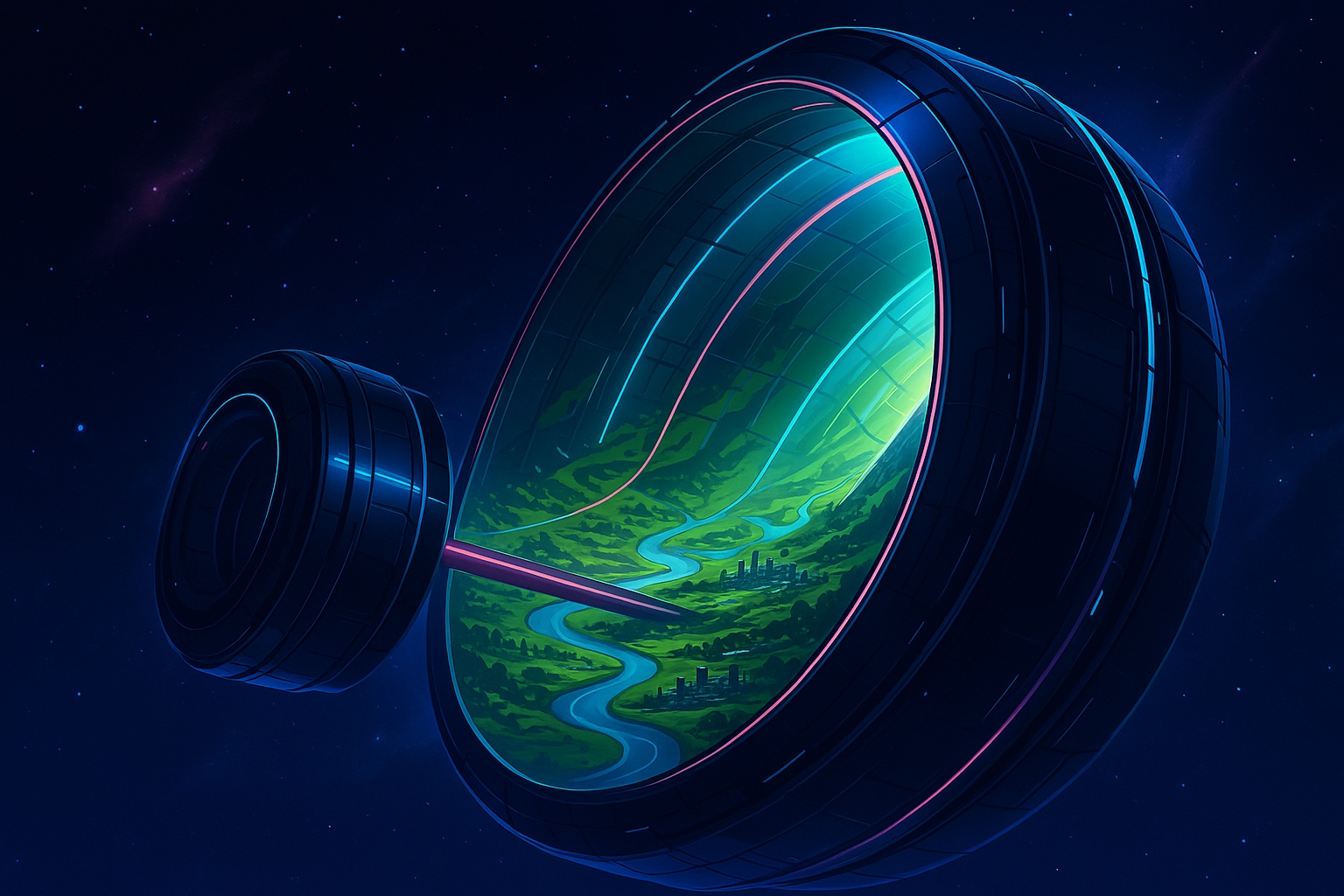
🛸 O'Neill Cylinders: Spinning Cities in Space
These massive rotating habitats — up to 32 kilometers long and 6 kilometers wide — would house millions of people in artificial gravity created by centrifugal force. Imagine living inside a giant spinning tube with cities, forests, and lakes built along the inner walls.
The physics: By spinning once every two minutes, these cylinders create Earth-like gravity on their inner surface. Residents would experience normal gravity, rain cycles, and day-night patterns created by massive mirrors directing sunlight inside.
Self-sufficient ecosystems: Each cylinder would contain complete agricultural systems, manufacturing facilities, and closed-loop life support. Atmospheric processors would recycle air and water with 99.9% efficiency, creating sustainable mini-worlds that could operate independently for centuries.
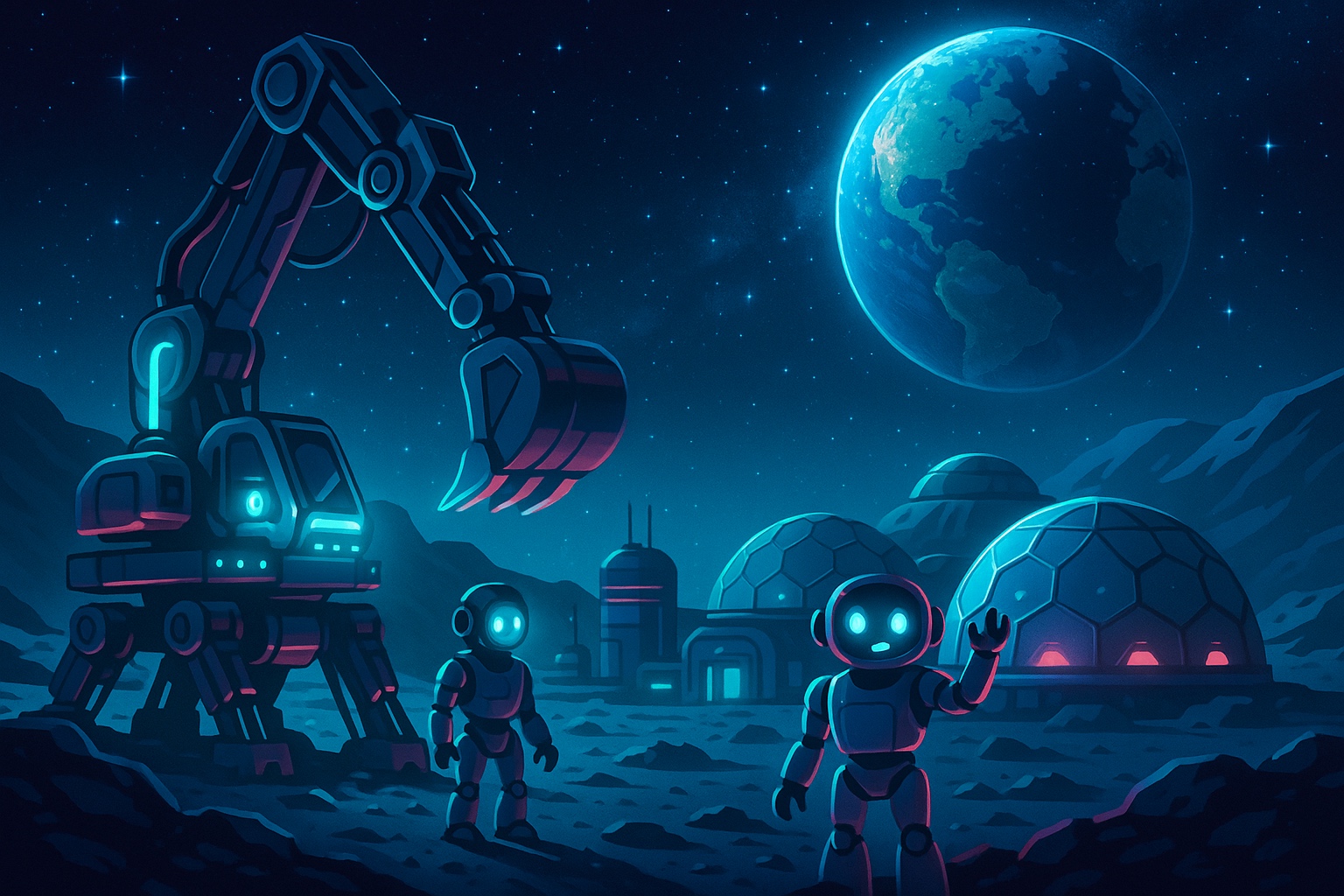
🌕 Lunar Industrial Revolution
The Moon contains vast quantities of Helium-3, a rare isotope that could power clean fusion reactors on Earth. Lunar mining operations could extract this fuel using robotic factories, potentially ending Earth's energy crisis forever.
The mining process: Giant solar-powered extractors would heat lunar soil to 600°C, releasing trapped Helium-3 gas. Just 100 tons of Helium-3 could power the entire United States for a year. The Moon contains enough to meet Earth's energy needs for thousands of years.
Lunar cities: Permanent bases built inside lava tubes (natural underground caverns) would house thousands of miners, engineers, and scientists. These cities would feature hydroponic farms, 3D printing factories, and launch facilities for interplanetary missions.
🪐 Terraforming: Creating New Worlds
Beyond space habitats, humans are planning to transform entire planets. Mars terraforming could begin with releasing greenhouse gases to thicken its atmosphere, followed by introducing genetically modified plants that can survive in Martian soil.
The 1000-year project: Using nuclear reactors to melt Mars' polar ice caps, redirecting comets to add water, and deploying orbital mirrors to increase surface temperature. Eventually, Mars could have breathable air, flowing rivers, and Earth-like weather patterns.
🔮 Mind-Bending Future Concepts
🌆 Space Elevator: The Ultimate Transportation System
A carbon nanotube cable 100,000 kilometers long, stretching from Earth's equator to a counterweight in space. This "cosmic elevator" would make space travel as routine as taking a train, reducing launch costs from $10,000 per kilogram to just $100.
The engineering challenge: The cable must be stronger than any material we can currently manufacture, able to withstand its own weight plus the stress of elevator cars climbing at high speed. Carbon nanotubes are theoretically strong enough, but we can only make them a few centimeters long — not 100,000 kilometers!
✨ Wormholes: Shortcuts Through Spacetime
Einstein's equations suggest the possibility of "wormholes" — tunnels through spacetime that could connect distant parts of the universe. A wormhole between Earth and Proxima Centauri could make a 4.2 light-year journey take just minutes!
The catch: Wormholes would require "exotic matter" with negative energy density to stay open. This theoretical material has never been observed and might not exist. Even if it does, stabilizing a human-sized wormhole might require more energy than the Sun produces in a billion years.
🌌 Matrioshka Brains: The Ultimate Supercomputers
Instead of Dyson swarms collecting energy for cities, imagine using that stellar energy to power the largest computers possible — "Matrioshka brains" that could simulate entire universes, run millions of virtual civilizations, or solve scientific problems that would take current computers trillions of years.
Computational power: A Matrioshka brain could perform 10^50 calculations per second — that's more processing power than all of humanity's computers combined, multiplied by itself a billion billion times. Such a computer could potentially upload human consciousness and run digital civilizations at accelerated speeds.
🌱 Next Week: Green Future Technology
Coming in Future Blast Week 2: Fusion reactors achieving energy breakeven, atmospheric carbon-capture machines reversing climate change, vertical farms feeding cities, and bio-engineered algae producing jet fuel. Plus: dive into the Math Blast Ocean Arc where you'll master multiplication while exploring underwater civilizations!
Preview: How do you power a city with the same reaction that lights up stars? How can artificial trees remove more CO2 than forests? And what happens when Jessica and Marina discover the ancient Luma civilization beneath the Pacific Ocean?
🚀 Get Future Blast Delivered to Your Inbox
Join thousands of young inventors and explorers discovering the future of science and technology!